By: Louise Smith, barrister - Updated: 13 Jul 2023|*Discuss
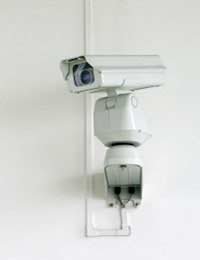
The use of CCTV in the UK, and its impact on human rights and civil liberties, regularly hits the headlines. Concerns are raised both about the number of CCTV cameras in the UK and the lack of regulation regarding their use. The UK’s coalition government have said that they intend to introduce a programme of government which sees greater protection for, and a restoration of, civil liberties in the UK. Amongst the areas they have said that they intend to address is an increase in the regulation of CCTV use.
UK – CCTV Nation?
Research conducted in 2002 suggested that there were 4.2 million CCTV cameras in the UK – equating to one CCTV camera for every 14 people. So startling was this statistic that it has been seized upon by critics of CCTV ever since. However, this figure was based on an extrapolation from a survey conducted in one area of London and now seems likely to be unreliable.
Comprehensive records of the number of CCTV cameras in the UK are not kept but a 2009 report suggested that the true figure for CCTV cameras in the UK is about 3.2 million. Whilst this represents a significant drop from the earlier estimate it is widely accepted as proof that the UK has more CCTV cameras than any other country in the world.
Who is Using CCTV?
The principal use of CCTV cameras may be by the police and other public authorities to combat crime and antisocial behaviour. However, private businesses – and even individuals – are increasingly turning to CCTV as a means of monitoring and protecting their property. Advances in CCTV technology have resulted in cameras that may have face recognition capabilities, allowing individuals to be picked out of a crowd from a database, or which can monitor for particular types of, suspicious, behaviour.
Are CCTV Cameras a Deterrent?
Despite the advances in technology some remain sceptical about the efficacy of CCTV in reducing the level of crime. If cameras are everywhere people may become inured to them and they may lose their deterrent effect. In addition, the cameras must be constantly maintained in order for useful data to be produced by them. Firm evidence that the use of CCTV cameras in the UK has had a positive impact on crime figures has not been forthcoming.
Human Rights and the Use of CCTV
Article 8 of the European Convention on Human Rights concerns the right to family and private life. This includes the right to respect for an individual’s home and correspondence. The right contained in Article 8 is known as a qualified right which means that there may be circumstances in which some interference with it is justifiable. This right means that an individual has the right to the level of personal privacy which is compatible with a democratic society, taking into account the equivalent rights and freedoms of others. Any interference with this right by a public authority may be subject to a test of acceptability.
The state and public authorities are permitted to interfere with an individual’s Article 8 right to privacy if the interference has an obvious legal justification. Amongst other reasons, this could be because the interference is necessary to protect national security or for the prevention of crime. In addition to having a clear legal justification, the amount of interference with the right must be proportionate to the end result achieved and only go as far as is required to achieve that result.
Public authorities, including the police and local councils, must balance the benefits of using CCTV against an individual’s right to privacy.
CCTV and Data Protection
The problem for an individual’s personal privacy is that if a camera is installed by a private company or an individual to monitor their own property there is little legal protection for any individual being observed by it. Nonetheless, there may be issues regarding the use and storage of any images captured by the CCTV camera.
The Data Protection Act 1998 governs the use of CCTV equipment and any data produced or stored by it. The Act is likely to apply if a CCTV camera is set up, in public place, to capture everything that passes in front of it. The owner of the CCTV equipment will have to comply with any relevant provisions of the Act. However, a householder who sets up a CCTV camera for purely “domestic purposes” may not have to comply with the Data Protection Act. The only recourse for an individual who feels they are being unreasonably targeted by such a CCTV camera – for example one belonging to an unfriendly neighbour - could be to make a complaint to the police about harassment.
Related Articles in the 'Information & Privacy' Category...
Could someone let me know if it's legal for a company to install a camera that is able to look at my house and my bedroom window, and not sign anywhere that there is CCTV recording?
I feel uneasy being at or passing by my window in my bedroom fearing that I am being watched or worse recorded. The camera has the ability to turn and watch the street to the sides as well as the whole front of my house. It is right across the road not far and heigh enough to point to my 2nd floor window.
Is this an invasion of privacy? Can I do anything about it?
E - 22-Apr-23 @ 12:18 AM
Can someone contact me please and advise me if there is a act under human rights that I can ask the police to remove a camera that’s placed directly outside my home looking into my property and the childrens bedroom windows, I am from the travelling community and the local police despise us have throughout the years at this address targeted my family and now there invading our privacy.
Please let me know if they would have had to inform the residents of the street before installing, as I have read elsewhere that you can object to the installation. Yet we were never informed. Can you put me in touch with someone who can advise and possibly help fight out case with us.
Thank you.
Barb - 6-Apr-23 @ 2:28 PM
I own a drive where my neighbours have the right to pass through the drive to get to there parking space. This is the only rights they have as per our title deeds. They have since started an air bnb up and have put a camera over there garage which they said was to protect the clients cars. This is definately not the case as my children walk up and down the drive and the camera comes on and starts filming. They are well away from the camera when on our drive so they are filming our personal space which is private and which we own.
1. Are they allowed to have the camera in the first place on private property?
2.If they are should it not be positioned in such away that it doesnt violate our land ?
Hope to hear from you soon
D K
dk - 22-Nov-22 @ 1:22 AM
In an effort to raise revenue, * Council have devised a one way system and erected cameras... one outside my house. The system has been rejected by residents and the cameras are set up so they can see who comes and goes from my house... how can I fight this?
Roz - 18-Jul-22 @ 8:51 AM
I live on a quiet rural village green in a conservation area in Surrey Zealous local councillors who have money to spend have decided that the village green should be covered by CCTV .They are proposing to bolt the cameras to a heritage lamppost and film the open green and the access to our homes.A narrative of anti social behaviour has been created to justify this.My neighbours and I are mystified by the claims of wrongdoing, as it is the opposite of our experience which is that there is little or none and feel that 24hour surveillance is not justified.The guidance says there must be a ‘pressing need’.
Questions:
1. Can I demand the Councillors publish the crime rates for the village green?Eg the number of times the police have been called to incidents in the past year.
2. Can I and my neighbours bring an action under the Human Rights Act. against the Council if those statistics show that there is no problem with anti social behaviour.
Bee - 9-Jul-21 @ 1:21 PM
My sons class (he is 6 years old with special needs) has installed cameras with audio and visual and the cameras are running all the time- we have been told its to protect teachers if an accusation is made - is this right?
tabtab - 21-Apr-21 @ 3:49 PM
Hi my neighbour has put up a cctv camera its pounting right at my sons door also my door they can record us going to & from our houses also one in back garden which is over look8ng my sons garden plus my garden what can we do about it please they will have all our identities surely this is illegal police dont do nothing niether do council not fair that they can get away with this no cctv stickers warning passers by that they are in a area where cctv is recording so therefor everyone that comes into the street will be recorded thanks She
She - 14-Mar-21 @ 11:07 PM
My ex partner, who I currently still share a house with, has put up cctv from his bedroom covering the front of our property. Firstly I am not sure that this is following all of the guidelines that are required for these systems as I believe it has a view beyond our boundary and I don’t want to be held accountable for any breaches of data protection. Secondly, I feel this is a breach of my privacy rights as he will be monitoring my movements and those of our daughter, who he doesn’t speak to. There was no discussion about this or information given regarding this. Advice would be very welcome.
Mads - 1-Feb-21 @ 10:10 AM
My neighbours use a thing called a RIV light blocks my CCTV from picking up any images the police say it is not illegal it also interferes with my Wi-Fi how is it not a legal ?
Sen - 1-Nov-20 @ 6:53 AM
If you’re employer is carrying out surveillance which is they are looking for people not clocking in and out for their tea breaks which sum people newbut they also found something else can they use the evidence or not
Rop - 2-Oct-19 @ 9:26 PM
Neighbour at number 7 Tre Pol TRELOWETH
Near St Austell
Cornwall
Who owns his property
Has a small CCTV Outside of the bedroom window facing
My mums garden
Community grounds I.E bit of green where small children play which belongs to I do believe Cornwall ocean housing. Now I do also believe that this is illegal and in breech of privacy all tho he has cctv sticker warning but is only 1x camera has had no problems with any criminal damage to his home or property
Farmking - 26-Aug-19 @ 3:26 AM
After complaining about vandalism to my bike, and to constant noise from neighbours above.. their landlord fitted camera in hallway pointed at my door
The noise has continued and now I feel trapped and victimised,..
I've been flooded twice from above.. politely complained about noise several times.. and now the letting agency puts the phone down on me.. surely someone can do something for me????
I'm feeling ill from all this... really ill
Ronx - 25-Aug-19 @ 9:51 AM
My next door neighbor has 5 cameras at the front of his house one with a security light is that no limit on how many you can have on your house or any law we are constantly being watched by directions
Sarah - 11-Aug-19 @ 2:24 PM
I as a Tennant, have been asked to take down CCTV trained on the washing line in a communal area. My neighbour has complained as her grandchildren play out there. I put up the camera after we were fairly sure the same neighbour has been stealing certain items of my partners clothing. The Housing Association don’t care about the theft they are only interested in these kids, who we also believe have been picking individual flowers and snapping others.
Surely, it would be of interest to the HA to find out the perpetrator of these, petty offences, rather than stop me recording from 8pm to 8am?
Shadgrind - 16-Jul-19 @ 12:23 PM
New build has installed camera for their garden area but it is right in line with my bedroom window!
Debz229c - 8-Jul-19 @ 1:51 PM
Myneighbours put a CCTV camera smack bang pointing at my house and parks his car on my white line the other side of the road that I rent with the property my car is too wide to get in the gap so I park my car on the dropped Kurb (white line) can anyone help me on some advice before I take matter in to my own hands because iv asked him not to park there and he carries on doing it!!
I pay for parking at any of my old properties for Security on my car and child safety for when he gets out my car.
Cheers
Chazza - 7-Jun-19 @ 10:17 PM
My Neighbouring landlord has installed cctv in our back yard over looking mine and two other neighbours Communal garden He asked no permissions or hasn't put sighn up.. The land Lord of this property does not even live here her rents it out.. Surely hes not allowed to do this...
yoxie - 16-May-19 @ 10:45 AM
my neighbor has put 2 CCTV cameras in. one above the front door and one above behind the front door, to me this is a communal area, has there are other rental residents that live there. were has he has bought and renovated the ground floor flat.
now there hasent been any discussions on them being fitted they were put in with out this. now this to me has it is very annoying has it infringes on the other residents privercy on comings and goinge from the house. what are the residents rights on this matter please help
paulie - 13-May-19 @ 9:45 AM
Cctv in public toilets in south east London Lewisham Molesworth Street there is public toilets in them are cctv watching you go to the toilet the law says no cctv should be in public toilets this is peeping Tom on the public you have no privacy for yourself when you have big brother above you going to the toilet you get young kids useing them the community who has had cctv stalled in them would they like to be watched in there properly
Rockey - 6-Mar-19 @ 1:43 PM
In south east London Lewisham Molesworth Street got public toilets in are cctv watching you going to the toilet the law says no cctv should.t be in public toilets this is peeping Tom on the public you get young kids useing them have cctv going into the toilets and comeing out but not in the toilets wear the public go for privacy
Rockey - 6-Mar-19 @ 12:32 PM
Leeds city council and Gough & Kelly CCTV, made five years of my life hell!! Know the manager from college some warned me he was behind the odd stalking situation around leeds and york.
They had some strangers, students following me around on some bizar candy camera situation, with bully ambulance and racist cops following me around as well, triggering off their sirens to let me know they were watching me on cctv and following me as well, if i spoke to a man about ducks in a river a siren could be heard, if i texted my related "im going to report gough & kelly cctv" police sirens would be heard in the distance the coincidences have turned into five years of hell, im not doing anything wrong they are! It stems from a police report i made against some transport police being abusive and discriminant. Half the city center of leeds have since been involved in the hate campaign to force me out of leeds, they even did this in stores, hospitals, when I reported this matter to British CCTV Comissionair, tony porter, he posted on twitter " I like to let members of the public know they are being watched" that was his arogant response.
Emily - 28-Feb-19 @ 8:56 PM
The apartment block where I live has security cameras fitted on all doors and externals.The signs say they are used to "protect the building".Photos have appeared of a resident entering the build with a bicycle which is prohibited and photos of the resident (not easily identifiable) have been posted to 'shame' the resident or get another resident to name the party.Is this within the remit of the managers to 'police' slight internal activities which it seems a far stretch to say were endangering the building or residents in any way?
Winston Smith - 10-Sep-18 @ 4:39 PM
I’ve had CCTV for years including a ring doorbell, my landlord has used my CCTV to get a conviction of an arsonist and eviction. I moved, same landlord, my neighbour hit my cat with a hose, they refuse to look at it or listen to two events, they demand I take the cameras down as they look at a communal area, my car, as well as my window or the will go for possession. I do have a voluntary license with the ICO
Ottob666 - 25-Jul-18 @ 8:11 AM
I have just come off the phone with the local police after having reported a neighbours camera pointing into my back garden. They have basically said that there is nothing they could do and said that I would have to go down the civil route. This is the second time I have reported this to them and the first time the neighbour was asked to move it but never has done so. As I don't sit on a mountain of cash I doubt that this is a viable option due to the potential cost. Does this mean that I just have to put up with this.
Ritchie - 30-May-18 @ 8:28 PM
Virgius - Your Question:
Company instaling cameras inside the vans,to watch us,are they right to do so????
Our Response:
Whereabouts are the vans situated? Is this private land? Are there signs to say CCtv is in operation?
AboutHumanRights - 11-May-18 @ 3:43 PM
Company instaling cameras inside the vans,to watch us,are they right to do so????
Virgius - 10-May-18 @ 4:56 PM
I'm having problems with a creep I use to study with in Leeds WY. I thought the odd stalking concerns was somebody I use to date but some others told me it was a man I use to study with called Richard Cuff, Gosh & Kelly. They said this manager for these CCTV and some staff called Ian were behind the odd stalking that was coordinated, in York and Leeds. Apparently his father is a police officer, so he has covered all his tracks and had the full back up of the bent police in Leeds. A man miss uses the public CCTV cameras to ask others to distress and harass a woman in public and gets away doing this for 3 years?
Its been humiliating and disturbing, through miss using the public CCTV, not to protect me but to distress me. He told me years ago he wanted to be some film producer, never thought he would miss use public CCTV services to ruin and wreck a woman's whole life with some other harassers. Public CCTV isn't for the media this is to protect the public and drivers. This ruined my whole life, some said online they had a 360 degree monitoring campaign to harass me. I was pestered in shops, in the street, at my doctors often these people knew where I was ahead of time. Who ever has been behind this is a bullying coward that enjoys distressing women. If its this man, that explains why the police have harassed me for no valid reason into silence, I was threatened two weeks ago by some police, for no valid reason it really upset my family and has ruined my life further. Leeds is a disturbing place, there are motorbike gangs, bent police and odd people that like to stalk people. Corrupt Cowards!
Amy - 22-Mar-18 @ 4:24 PM
I'm having the same problem with my neighbours cctv ... the CCTV code of practice changed in 2017 and householders are no longer exempt from the DPA if their cctv extends beyond the boundaries of their own property. However I have reported this to the police who won't even come and check his cctv (as they have no powers to do so) and the so-called experts in the police force are still citing outdated guidance on 'domestic use' of cctv. I have also reported my neighbour to the ICO but I don't know how long it'll be before they look into it and in the meantime myself and my two children are under 24 hr surveillance on our own property!!
Liz - 7-Mar-18 @ 9:55 PM
Jackie78 - Your Question:
My neighbour has installed cctv cameras around their house but one looks like it's pointing straight into my kitchen. Surely this isn't legal. Is there anyone I can go to
Our Response:
You can ask your local police force if they will pop round and check the siting of the cameras.
hero Re: UK Breaches of Human Rights Law
My question is are polly grahps going against your human rights to say no and last I checked you can still say no in the uk…
19 May 2025
Generic Re: Your Rights as a Suspect of a Crime
If a person has been arrested for an offence, and no accuser named, or only limited information as to the allegation so…
7 April 2025
Journeyman Re: UK Breaches of Human Rights Law
In 2018 social workers in Bournemouth deliberately neglected my concerns for the welfare of my daughter the lady in question…
Dave Re: Human Rights and Adopted Children
TWO PASSPORTS FOR INTERNATIONAL ADOPTION
I adopted two kids on international adoption and got my nationality after the…
20 February 2024
Gillian Foulds Re: Human Rights and Medical Treatment
I am very concerned about my feelings of being gaslighted by just about everyone! I am a victim of the mesh implant I have…
Big cheese Re: Can You Be Charged Without Caution?
So I was arrested from my home for something but I was taken to police station searched trousers took off me for there…


Re: UK Breaches of Human Rights Law
My question is are polly grahps going against your human rights to say no and last I checked you can still say no in the uk…
Re: Your Rights as a Suspect of a Crime
If a person has been arrested for an offence, and no accuser named, or only limited information as to the allegation so…
Re: UK Breaches of Human Rights Law
In 2018 social workers in Bournemouth deliberately neglected my concerns for the welfare of my daughter the lady in question…
Re: The UK's Equality and Human Rights Commission
How are you? I think London remains alert everywhere to human compassion. But I am feeling this less.…
Re: When a Country Breaches International Human Rights Law
My skibidi rizz was fanum taxed by Kai Cenat and that has brutally violated my human rights and…
Re: When a Country Breaches International Human Rights Law
The earth is flat and the moon landing was fake
Re: Human Rights and Adopted Children
TWO PASSPORTS FOR INTERNATIONAL ADOPTION I adopted two kids on international adoption and got my nationality after the…
Re: Human Rights and Medical Treatment
I am very concerned about my feelings of being gaslighted by just about everyone! I am a victim of the mesh implant I have…
Re: Do Airport Security Measures Breach My Human Rights?
There were no Muslims in the west and no problems. Then the leftists in power decided to bring…
Re: Can You Be Charged Without Caution?
So I was arrested from my home for something but I was taken to police station searched trousers took off me for there…